
CURRENT EXHIBITION
AFTER NATURE | 21 NOV 2025 - 14 FEB 2026
About the Exhibition
Proposition and CLOSE are delighted to announce that after a very successful showing at CLOSE in Somerset, the acclaimed group exhibition, After Nature, will transfer to Proposition Bethnal Green.
Featuring internationally acclaimed artists such as Richard Long and David Nash, After Nature also includes work by overlooked pioneers and next generation talent, including Mercedes Balle, Chris Dury, Alexandra Daisy Ginsberg, Alex Hartley, Magnus Hammick, Simon Hitchens, Tania Kovats, Alastair & Fleur Mackie, Onya McCausland, Nissa Nishikawa, Aimee Parrott, Lotte Scott and Fred Sorrell. The exhibition offers a timely exploration of the ways in which artists are looking at and thinking about nature in the twenty-first century, with works spanning a range of media, including sculpture, ceramics, drawing, painting and photography.
After Nature explores ways of making art 'after' nature, in imitation of natural forms and systems, but it is inevitably haunted by the idea of coming after nature too. It is now more than three decades since the American author and environmentalist Bill McKibben published The End of Nature (1989), one of the first books written for a general audience which warned of the imminent climate crisis, suggesting that we now live in a ‘post-natural world’ (so great and so pervasive has the impact of humanity been on the non-human). Yet in 2025 we find ourselves living in a world where extreme weather events are increasingly common, and political leaders question the reality of climate change and double down on fossil fuel extraction.
Artists have long addressed the complexities of these issues, often quietly and non-polemically, but with subtle power and insistence. By making work that interrogates the ways in which culture can represent and reflect the environment, art can perhaps offer us new ways of understanding our present predicament. This is therefore a show both for and about the present moment, an exhibition for a time of environmental collapse, for a quickening emergency.
The exhibition was originally conceived for CLOSE, a gallery in Somerset that sits within a rural landscape, much of which has been rewilded. In that context the exhibition seemed to speak to its setting, the works entering into a dialogue with their surroundings, creating a powerful connection between inside and outside. Proposition offers a very different context. Embedded in one of the biggest cities in the world, Proposition exists to ‘provoke reimagination and action around the potential positive impact that our civilisation can have on biodiversity and ecological resilience.’ The organisation’s ethos is that art can allow us to ‘build connections, inspire emotion and engage people in a creative and innovative way that can raise awareness and make [the issues we face] more accessible.’
In the heart of London’s east end, After Nature, which reflects upon our relationships with nature, becomes a form of resistance, an alternative way of thinking forward at a time of climate emergency.
Curated by Ben Tufnell
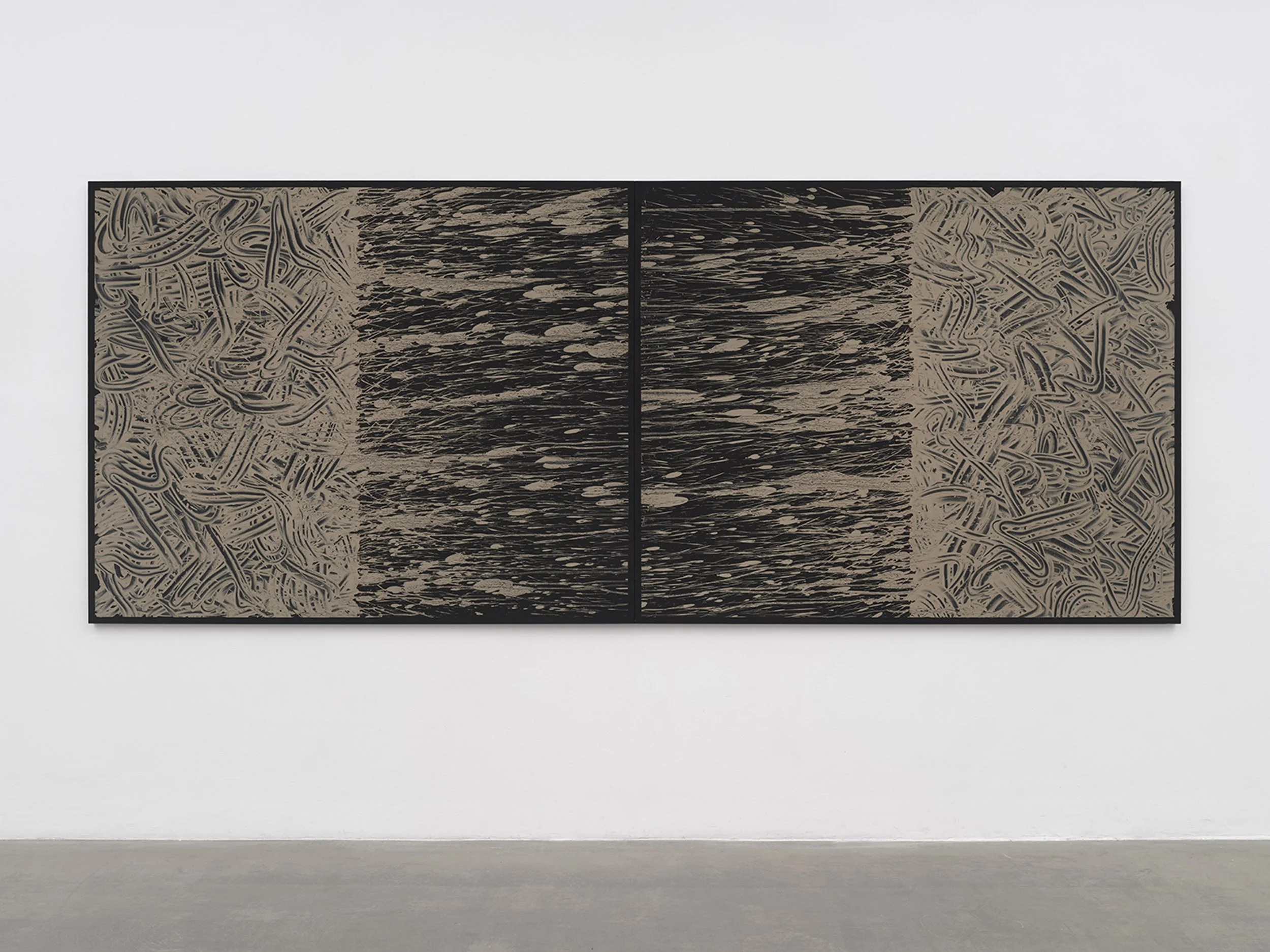
Richard Long, courtesy the artist and Lisson Gallery
Visit the Exhibition
Open Wednesday - Saturday, 12pm - 7pm
Proposition Bethnal Green, 279 Cambridge Heath Road, London, E2 0EL
Private view: Thursday 20th November at 6.00pm - 8.30pm. RSVP: rsvp@propositionstudios.com
Artist Biographies
Chris Drury (b.1948) is an environmental artist, known internationally for his site-specific nature based sculptures. He also makes gallery-based installations and sculptures, works on paper, and digital and video art. Drury’s work makes connections between different phenomena in the world, specifically between Nature and Culture, Inner and Outer and Microcosm and Macrocosm. To this end he collaborates with scientists and technicians from a broad spectrum of disciplines. Recent projects include a residency at The Nirox Foundation in The Cradle of Humankind, South Africa, working with palaeontologists, geologists and anthropologists, and a British Antarctic Survey residency in Antarctica.
For After Nature, Drury shows works on paper from ‘Exchange’, a project made on farms in West Dorset, alongside a monumental wall-drawing depicting a mushroom spore print, made with dust and ash from CLOSE.
Chris Drury has exhibited internationally since the 1980s. Notable solo exhibitions include Les Jardins Des Arts, Chateaubourg, France (2022), Salon Vert, Geneva (2019), Oppland Art Centre, Lillehammer, Norway (2014), Dovecot Studios, Edinburgh (2011) and Nevada Museum of Art, Reno (2008). Recent group exhibitions include Groundwork, King’s Lynn (2021) and Nevada Museum of Art (2020). His work is held in international collections including V&A, London, British Museum, London, Arts Council Collection, London, Government Art Collection, London, Wellcome Collection, London, Leeds Art Gallery, Towner Art Gallery, Eastbourne, Whitworth Art Gallery, Manchester, Henry Art Gallery, Seattle, North Carolina Museum of Art and the Nevada Museum of Art.
Dr Alexandra Daisy Ginsberg (b.1982). is a multidisciplinary artist examining our fraught relationships with nature and technology. Through artworks, writing and curatorial projects, Ginsberg’s work explores subjects as diverse as artificial intelligence, synthetic biology, conservation, biodiversity and evolution, as she investigates the human impulse to “better” the
world. She experiments with simulation, representation and the nonhuman perspective to question the contemporary fixation on innovation over conservation, despite the environmental crisis.
For After Nature, Ginsberg shows prints from an experimental interspecies living artwork, Pollinator Pathmaker. Pollinator Pathmaker is an artwork for pollinators, planted and cared for by humans, and was originally commissioned by the Eden Project.
Ginsburg has exhibited internationally, including at MoMA New York, the Museum of Contemporary Art, Tokyo, the National Museum of China, the Centre Pompidou, Paris, Bildmuseet, Umea, Serpentine Gallery, London and the Royal Academy of Arts, London. Her work is held in private and museum permanent collections, including the Art Institute of Chicago, the Cooper Hewitt Smithsonian Design Museum, Therme Art and ZKM Karlsruhe.
Magnus Hammick (b.1971) is a painter and performance artist. Hammick graduated from Oxford University and emerged as one of the key figures in the Young British Art movement in the 1990s. His work was included in Sensation: Young British Artists from the Saatchi Collection at the Royal Academy of Arts, London, in 1997. His work is held in many private and public collections.
Hammick is also an environmentalist and entrepreneur and has devoted his time to developing products that actively lower our carbon emissions. He balances this with an art practice which focuses on nature and his relationship to it.
The ‘First Light’ series, exhibited at CLOSE in 2024, are derived from Hammick’s daily dawn walking ritual during which he photographs the same oak tree, thereby documenting the cyclical nature of the seasons.
Alex Hartley (b.1963). Hartley’s work addresses complicated and sometimes contradictory attitudes toward the built and natural environments, showing us new ways of physically experiencing and thinking about our constructed surroundings. In The Houses he brings together photographic and overlaid painterly elements to examine the idea of the viewpoint, the frame and the boundary – between interior and exterior, manmade and natural environments, public and private space, two and three dimensions. Iconic examples of modernist domestic architecture, photographed by the artist over the past twenty-five years, primarily in Los Angeles, form the basis of these atmospheric monochrome works, in which the photographic image lies separated beneath hand-painted elements which describe and embellish a verdant landscape. Crucially, the works embody an uncanny ambiguity. In some images the manmade structures seem to be overwhelmed and overrun by the vegetation. From another perspective, the images can be read as exploring the ways in which man inserts himself into nature.
Hartley graduated from the Royal College of Art in 1990 and lives and works in London and Devon. He has exhibited internationally since the 1990s. His works are in collections including the Arts Council Collection, London, Government Art Collection, London, Caldic Collection, Rotterdam and the Museum Moderner Kunst Stiftung Ludwig, Vienna.
Simon Hitchens (b.1967). Known primarily as a sculptor, Hitchens has exhibited internationally since the 1990s. Much of his work explores the materiality and meaning of rock. He says, ‘My sculptures subtly investigate the essence of the things we perceive: the physical world, nature and our place within it. I am fascinated by rock: historically as a medium to make sculpture, physically
as the very earth that supports us and geologically as the almost ageless constant that resonates through time, giving perspective to our lives on this planet.’
Epoch - 07.41 Glatting Beacon 16.01 (2024) is a new work from an ongoing series of durational drawings, tracing the outlines of the shadows cast by a rock throughout a single day. For the first time Hitchens presents both drawing and the rock, a piece of flint, creating a dynamic relationship between the two.
Concurrently with After Nature, Simon Hitchens will exhibit in Frieze Sculpture in Regent’s Park, London
Tania Kovats (b.1966). makes drawings, sculpture, installations and large-scale time-based projects that explore our experience and understanding of the natural world. While she is perhaps best known for her sculptures and drawings, her work encompasses a range of creative strategies, from map-making to writing, and she is also active as a curator, teacher and author. Kovats’ enduring themes are the experience and understanding of landscape, geological processes, patterns of growth and the intersection of landscape, nature and culture and how art can speak to our critical climate crisis.
The Last of My Summer Blooms (2023), made with Dahlia flowers from the artist’s garden, evoke not only the inevitable decay in nature and the passing of the seasons, but the passing of Kovats’ own fertility, as she enters the menopause. She writes: ‘The natural dyes of the blooms are released and stain the paper, while the petals merge with the fibres of the paper. As they dry, they are fixed as these beautiful ghost flowers, quiet memorials to the sweet joys and melancholy of late summer. I started to make these works as I became postmenopausal. The works mark the end of my body’s fertility and my menstrual cycle stopping; a clock that has been keeping regular time since I was ten years old.’
Kovats studied at Newcastle Polytechnic and the Royal College of Art. Notable recent solo exhibitions include Museum Beelden am Zee, The Netherlands (2025), Dovecot Studios, Edinburgh (2024), Parafin, London (2023, 2021), Berwick Gymnasium (2019), Phoenix Gallery, Exeter (2019), Museum of Science & Industry, Manchester (2016) and Fruitmarket Gallery, Edinburgh (2014). Important recent group exhibitions include Earthbound, New Art Gallery, Walsall (2024), Planet Ocean, The Box, Plymouth (2024), Sussex Landscape: Chalk, Wood, Water, Pallant House Gallery, Chichester (2022), UnNatural History (curated by Invisible Dust), Herbert Museum & Art Gallery, Coventry (2021), Future Knowledge, Modern Art Oxford (2018), Women Power Protest, Birmingham Museum and Art Gallery (2018) and Vita Vitale, Palazzo Grassi, Venice (2015).
Kovats’ work is held in numerous public and private collections including the Arts Council Collection, London, British Council, London, National Maritime Museum, London, Government Art Collection, London, Victoria & Albert Museum, London, Henry Moore Institute, Leeds, Jupiter Artland, Edinburgh, Fruitmarket Gallery, Edinburgh, Yale Center for British Art, New Haven and the Speed Museum, Kentucky. Public artworks are permanently installed at the Natural History Museum, London, Government Art Collection at Admiralty House, London, Fruitmarket Gallery, Edinburgh and the Barbraham Research Campus in Cambridge. Kovats is currently Professor of Drawing and Making at DJCAD, University of Dundee.
Richard Long (b.1945). Considered one of the most influential artists of his generation, Richard Long’s works have extended the possibilities of sculpture beyond traditional materials and methods. Central to Long’s work is the activity of walking. Long’s walking works are represented by photographs and texts, but he also makes sculptures using natural materials, both in the landscape and in the gallery.
Long first used mud as a material in 1969. After Nature includes a large work made in River Avon mud (sourced close to Long’s home in Bristol) in which the liquid mud, directed by the artist’s energetic gestures, splashes, drips and runs. Two small works on paper are made by simply dipping the sheets of paper into a bath of mud and drawing them out.
Richard Long lives and works between London and Bristol. Recent solo exhibitions include Rijksmuseum, Amsterdam, the Netherlands (2023), M Leuven, Leuven, Belgium (2021), De Pont Museum, Tilburg, Netherlands (2019), Arnolfini, Bristol (2015), Hamburger Bahnhof, Berlin, (2010) and Tate Britain, London (2009). He represented Britain at the 37th Venice Biennale (1976) and won the Turner Prize in 1989. He received the Chevalier de l’Ordre des Arts et des Lettres from the French Ministry of Culture (1990) and was awarded Japan’s Praemium Imperiale in the field of sculpture (2009). He was knighted in the 2018 Honours List.
Long’s work is held in major museum collections worldwide. In May 2025, The National Gallery unveiled Long’s Mud Sun a new permanent commission for the gallery’s refurbished Sainsbury Wing.
Alistair & Fleur Mackie (b. 1977) Alastair grew up in a farming community in the south of Cornwall, while Fleur’s childhood was split between Cameroon, France and the UK. They met at art school in London in the late 1990s, and over time their work has evolved into a close collaboration. In 2011, they moved to North Cornwall, the landscape of which has played a central part in shaping their vocabulary. Typically constructed from diligently sourced, often site-specific objects, their works possess a cyclical quality – building a dialogue with the circumstances of their origins, sparking connections across time and space and offering commentary on the intersection of ecology and anthropology.
Alastair and Fleur Mackie have exhibited extensively in the UK and internationally. Recent solo exhibitions include Projected Outcomes, KARST, Plymouth (2025) and Between The Dog and The Wolf, Copperfield, London (2019). Recent group exhibitions include Catch Me If You Can, ERES Foundation, Munich (2024), We Are Floating in Space, Newlyn Art Gallery & The Exchange, Penzance (2023), Works from the Olbricht Collection, Museum Folkwang, Essen (2022), Formen der Nature, Museum Villa Rot, Germany (2018) and Doing Identity, Kunstmuseum Bochum, Germany (2018). In 2025 they curated a group show entitled Afterimage for Tremenheere Sculpture Gardens, Penzance. They have worked on a number of public commissions, and their work is held in international collections including The Eres Foundation in Munich and the Wellcome Collection in London.
Onya McCausland (b. 1971). McCausland’s paintings explore ideas of landscape using materials which are sourced from and evoke specific locations. Her new paintings in After Nature are made using ochre and copper sulphate, materials that are by-products of iron and copper mining, sourced from decommissioned mines.
McCausland’s practice develops an environmentalism that addresses the materials and materiality of how painting and paint relates to the Earth (as being made from chemical elements and processes) and human cultures, as well as traditions of art that relate to specific sites and places.
McCausland studied painting at Falmouth School of Art, and the Slade School of Fine Art, where she returned to complete a PhD between 2014-17. In 1995 she was an external recipient of the Slade's Boise Travel Scholarship. In 2018 she was awarded a three year Post Doctoral Early Career Fellowship from the Leverhulme Foundation. During this time established Turning Landscape CIC, a community interest company making paint from waste iron residues forming from polluting mine waters in the South Wales village of Six Bells. In 2022 the company received funding from the Heritage Lottery Fund Wales to establish an arts and educational programme alongside paint making. In 2020 she established a research and reading group called Environment, Ecology, Sustainability, and was appointed Head of Undergraduate Painting in at the Slade School of Fine Art in 2022.
Recent exhibitions include Middlesborough Institute of Modern Art, Norrtälje Konsthall, Sweden, Akureyri Museum, Iceland and Karsten Schubert Gallery, London.
David Nash (b.1945) is widely regarded as one of the foremost artists working with trees and wood internationally. He studied at Kingston College of Art 1963-67 and at Chelsea School of Art 1969- 70. Since his solo exhibitions were in 1973, he has exhibited extensively around the world.
Nash’s work has been included in numerous important international group exhibitions since 1970, including The Condition of Sculpture, at the Hayward Gallery, London (1975), British Art Now: An American Perspective, at the Solomon R Guggenheim Museum, New York and tour (1980), British Sculpture in the Twentieth Century, Part II, at the Whitechapel Art Gallery, London (1981) and Aspects of British Art Today, at the Tokyo Metropolitan Art Museum in (1982). Important recent solo exhibitions include National Museum of Wales, Cardiff, Yorkshire Sculpture Park, Wakefield, Royal Botanic Gardens, Kew, London, and the Fondation Fernet-Branca, St Louis, France.
Nash has works in over 80 major public collections around the world including Tate, London, Scottish National Gallery, Edinburgh, Solomon R. Guggenheim Museum, New York, Centre Pompidou, Paris, Art Gallery of NSW, Sydney and the Museum of Contemporary Art, Tokyo. Nash lives and works in North Wales.
Nissa Nishikawa (born 1981). Nissa Nishikawa’s multidimensional practice comprises performance, poetry, painting, sculpture and moving image. She researches and interprets traditional forms of dance, ritual and craft in ways that illuminate animistic and alchemical philosophies with an embodied and structural approach. Nishikawa often works in the open-air and studios equipped to house fire; interconnecting the layers of the arcane with the supra sensual, the living earth and various conscious inhabitants.
In After Nature, Nishikawa exhibits new sculptures, ceramics fired with organic materials gathered from the landscape around CLOSE.
Nissa Nishikawa studied at Concordia University, Montreal, Royal Academy of Dramatic Art, London and Goldsmiths, London. Recent solo exhibitions and performances include Camden Arts
Centre, London (2024), Somerset House (2022), Nottingham Contemporary (2021) and The Wellcome Trust, London (2019).
Aimee Parrott (b.1987). Organic motifs – seeds, feathers, plants – permeate Aimée Parrott’s work. Her forms suggest a sense of movement and allude to growth. Her abstract work suggests interconnectivity with the environment, where unnamable microbial forms add to the overall impression of a relationship between the micro and the macro, evolution and deep time. While her work may read like abstractions her sensitivity to/for representational motifs reveal her interest in the transformations observed in ecological or geological structures and other matter.
Recent works continue to explore the disjunction between internal sensations and exterior impressions with works that hover between gesture and form, suggesting hybridity, metamorphosis and a symbiotic blurring of boundaries. Many employ natural materials, plant-based dyes and inks.
Aimée Parrott studied at University College Falmouth and Royal Academy Schools. Recent solo exhibitions include Parafin, London (2023), Mackintosh Lane, London (2022), Broadway Gallery, Letchworth Garden City (2020) and Pippy Houldsworth Gallery, London (2018). She has participated in numerous group exhibitions including Thread Suns: Anna Higgins and Aimee Parrott, Ione & Mann, London (2025), The Conference of the Birds at Tristan Hoare Gallery, London (2022), Superpower at Sim Smith Gallery, London (2022), Secret of Lightness at Parafin, London (2022) and ‘The Studio at 4am’ at Hastings Contemporary (2020). In 2024 one of Parrott’s paintings was acquired by the Arts Council Collection.
Lotte Scott (b.1990). Lotte Scott was born in London but grew up in Somerset. She studied at Goldsmiths and then at the Slade School of Fine Art. In 2020 she was the recipient of the Gilchrist Fisher Award for artists under 30 working with the theme of Landscape.
Recent exhibitions include Lexis Over Land at the Tremenheere Sculpture Gardens Gallery, Liquid Land at Anglia Ruskin Gallery, Cambridge, Fragile Nature at Groundwork Gallery, King’s Lynn, and a solo show, The Fields are Seas, at OUTPOST, Norwich. As part of SAW Festival in 2019 she exhibited A Long Hundred in a monastic fishery building near Glastonbury.
In 2024 Scott was commissioned by the Mendip Hills National Landscape Team in partnership with Somerset Art Works, to create Ash Viewing. The project began with Scott making lime from Mendip stone, creating a limewash that was used to cover an entire ash tree felled due to ash dieback disease. The tree was installed in a stone barn, creating a poignant artwork highlighting issues of environmental change and degradation. Subsequently, Scott turned the tree into charcoal.
Fred Sorrell (b.1984) Sorrell’s work constitutes an open-ended enquiry into the nature of perception. His position is that an abstract painting can be autonomous – an image that exists in purely visual terms - but that it can also communicate something of its inspiration. He describes the dynamic space between visceral bodily sensation and fleeting visual impressions as the starting point for his work. Physical and sensory experiences are rendered into pictorial structures that then serve as a launch pad from which a new image can emerge. Importantly, the paintings also address the temporal or ephemeral nature of these visual/visceral experiences. Just as the observation of visual phenomena in nature unfolds over time, rather than being fixed in a single instant (as in a photograph) Sorrell’s paintings are carefully calibrated to reward extended viewing.
Many of his works are rooted in the experience of landscape, light and nature, as suggested by titles such as Coast (2022), Orchard (2022) and Standing Meditation (2024).
Sorrell studied at Falmouth College University (2004-8). Recent solo exhibitions include Parafin, London (2022, 2020) and Between Sea and Sky, Saturation Point, London (2019). He has participated in numerous group exhibitions including Landscapes of Time and Memory, Fred Levine, Bruton (2925), Expanding Landscapes: Painting After Land Art, Abbot Hall Art Gallery, Kendal (2025) and Hestercombe House & Gallery (2024), Royal Standard, Liverpool, and Cob Gallery, London. He has undertaken residencies at The Banff Centre, The Florence Trust, London, Takt, Berlin and Kerel de Grote Hogeschool, Antwerp.